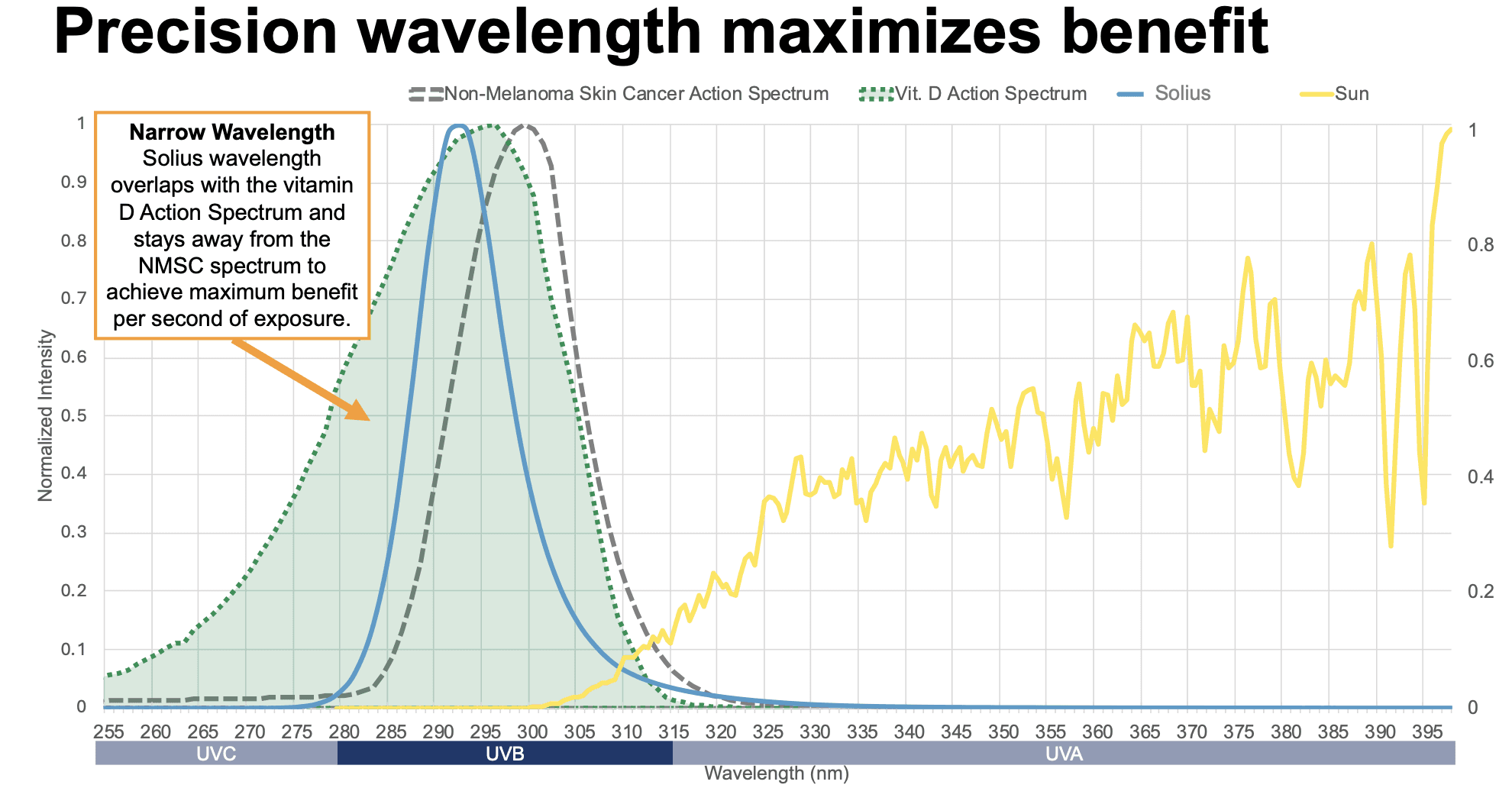
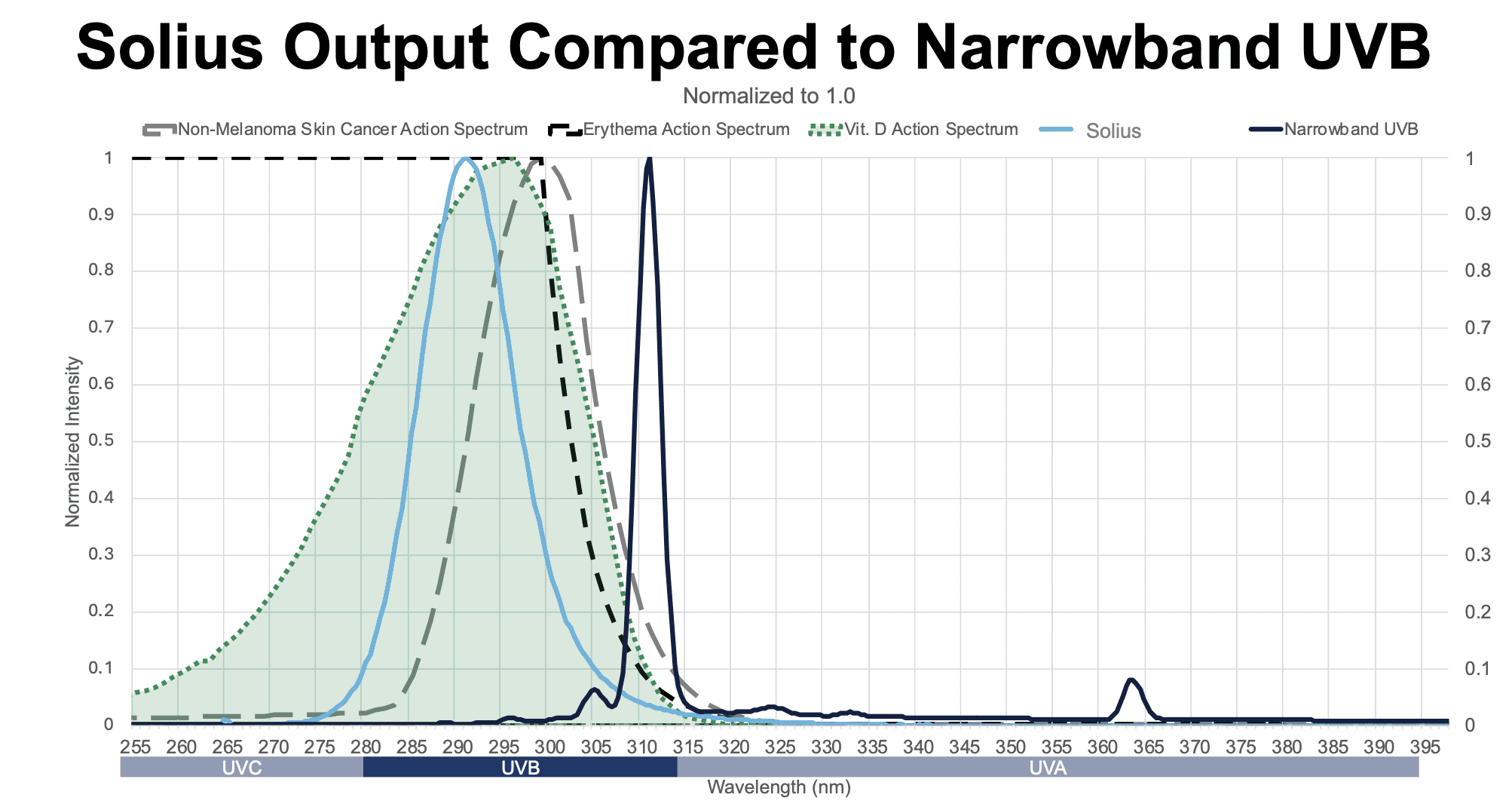
Solius delivers UVB energy at a precise wavelength targeting 293 nm, selected to optimize biological benefit while minimizing unnecessary risk.
Targeting the Most Effective Part of Sunlight
In natural sunlight, UVB represents less than 1% of total solar energy reaching the Earth’s surface, yet it drives some of the body’s most important biological processes, including vitamin D₃ synthesis.
Decades of photobiology research, including the CIE vitamin D action spectrum, show that vitamin D production in human skin is most efficient within the 290–315 nm range, with peak effectiveness around 295–297 nm.
Positioned for Efficiency with Reduced Risk
Solius is intentionally tuned slightly below this peak, centering around 293 nm. This positioning is designed to maximize the healthy benefits of UVB while reducing overlap with wavelengths more strongly associated with DNA damage. The CIE non-melanoma skin cancer (NMSC) action spectrum peaks closer to ~299–300 nm, where carcinogenic risk is higher. By shifting just below this region, Solius preserves strong biological activity while reducing exposure to higher-risk wavelengths.
Clinical and photobiology research consistently show that the narrow UVB band between ~291–295 nm provides an optimal balance of high efficiency for vitamin D₃ synthesis and lower relative contribution to erythema and DNA damage. Solius concentrates its output within this narrow therapeutic window, delivering a precise biological signal rather than the broad, inefficient spectrum of natural sunlight.
By engineering light at this specific wavelength range, Solius maximizes the beneficial effects of UVB while minimizing total UV exposure and avoiding unnecessary radiation - enabling a more controlled and efficient alternative to natural sun exposure.